Chandler woman out of home after burst city pipe flooded apartment
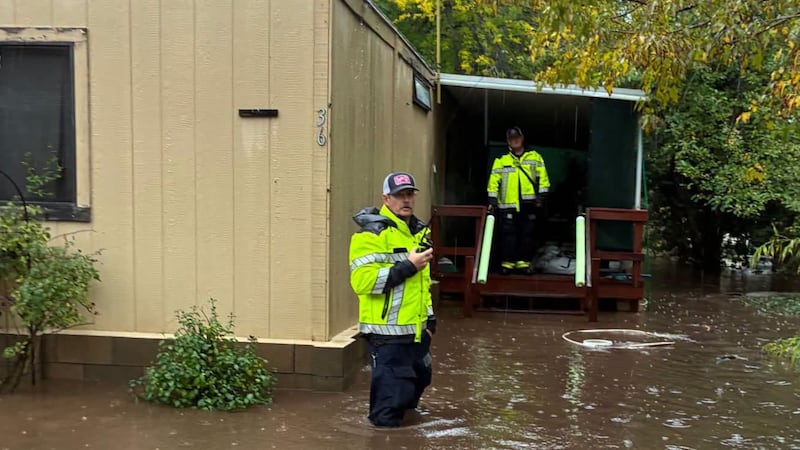
CHANDLER, AZ (AZFamily) — A Chandler woman says she’s out of a home after a city pipe burst and flooded her apartment.
Tenant rights attorneys say situations like this are common and it’s important you know what to do if this ever happens to you.
Amy Antell says she was just sitting at her dining room table on Monday when all of a sudden, water rushed into her apartment and destroyed it.
She claims management at her complex, Avana Chandler, hasn’t been much help.
“There was just gushing water and I kinda panicked,” she said.
Now, her home is gutted and stripped down to the bones as crews clean up the damage.
“It’s a complete loss,” she said.
Her unit is on the first floor and downhill from the water line that broke.
Antell says she’s the only one impacted.
“I’m homeless in a sense,” she said.
Antell says she’s lived at Avana Chandler for the last year and a half. The complex is owned by the multi-billion dollar real estate company called Greystar.
“I have renter’s insurance, but renter’s insurance told me they can’t cover it because it’s from a pipe from outside of the property that they cover,” said Antell.
Antell is currently staying with family and on her own dime, she says she spent hundreds of dollars to rent an Airbnb for a few days earlier this week. She believes management should step up to help.
“Give me a key to another place to put my stuff into, offer another place just to sleep in,” she said.
Antell has been talking to Avana Chandler since this happened. They sent her an email yesterday that said:
“Dear Amy,
I hope this email finds you well. I wanted to confirm that we have reached out to our attorneys regarding the drafting of the mutual rescission letter for your lease. We are working as quickly as possible to prepare the necessary legal documents, and I assure you that we are prioritizing this matter.
As discussed, we are in agreement to release you from your lease without any lease break fees, and the details of this will be clearly outlined in the mutual rescission letter from our attorneys.
We truly appreciate your patience as we work through this process."
She’s fearful of signing a new contract somewhere else until this is officially resolved.
“I think it really comes down to do the right thing,” said Antell.
The Arizona Attorney General’s Office gave Arizona’s Family some information about what to do if you find yourself in a similar situation. The attorney general says tenants should be cautious and document everything in writing.
“It helps to record the conversation or have a second person (friend, family) as a witness when talking with their landlords as well," the office said.
Under the Arizona Residential Landlord and Tenant Act, landlords are obligated to maintain rental properties in a fit and habitable condition, ensuring compliance with applicable health and safety codes. If a landlord fails to meet these obligations, resulting in conditions that materially affect health and safety, tenants have specific rights and remedies.
The tenant must inform the landlord in writing about any complaints and concerns that violate habitability standards. Habitability standards may also differ from city to city and county to county throughout the state.
Tenant remedies for landlord’s noncompliance (after the landlord has knowledge of noncompliance delivered in the manner set out in the tenant’s lease agreement):
- Notice of breach: A tenant may deliver a written notice to the landlord specifying the acts and omissions constituting the breach and stating that the rental agreement will terminate upon a date not less than five days after receipt of the notice if the breach is not remedied in five days.
- Termination of rental agreement: If the landlord fails to remedy the breach within the specified time, the rental agreement terminates, and the tenant must vacate the dwelling unit as provided in the notice. Tenant should be prepared to promptly vacate in this time frame as the landlord will be unlikely to provide an extension if a tenant cannot find alternative accommodations or storage for their personal belongings.
- Recovery of damages: The tenant may recover damages and obtain injunctive relief for any noncompliance by the landlord with the rental agreement or with the landlord’s obligations under the Act. (But be careful if a landlord claims rents or other fees are due from the tenant at the time of move out, as the justice courts tend to side with landlords.)
So what about the landlord’s obligation regarding moving costs?
The act does not explicitly require landlords to cover tenants' moving costs, even when a tenant terminates the lease due to the landlord’s failure to maintain a safe and habitable environment. Therefore, unless such provisions are included in the rental agreement, landlords are generally not obligated to pay for tenants' relocation expenses under these circumstances.
While Arizona law provides tenants with remedies such as lease termination and potential recovery of damages when landlords fail to maintain safe and habitable living conditions, it does not specifically mandate landlords to cover moving costs incurred by tenants who vacate due to such issues. Tenants seeking compensation for relocation expenses may need to pursue legal action to recover those costs, depending on the specifics of their situation. In some cases, tenants can to offset their costs against outstanding rental payments, but should defer to their lease agreement to understand any related contract terms.
Under the Arizona Residential Landlord and Tenant Act, landlords are required to maintain rental properties in a habitable condition, complying with health and safety standards. If a rental unit becomes uninhabitable due to issues beyond the tenant’s control, the landlord is generally obligated to address and rectify these issues within five days of receipt of notice from the tenant.
However, if the necessary repairs are extensive and require the tenant to vacate the premises, the landlord may choose to terminate the lease agreement.
Landlord’s Obligations and Tenant’s Rights:
- Notice of Termination: The landlord must provide the tenant with proper notice as stipulated in the lease agreement and in accordance with Arizona law. This includes specifying the reason for termination and the effective date.
- Return of Security Deposit: Upon termination of the lease, the landlord is required to return the tenant’s security deposit within 14 days, minus any lawful deductions for unpaid rent or damages beyond normal wear and tear. Tenants must be sure to provide the landlord with an updated mailing address so that they can receive a return.
Arizona law does not explicitly require landlords to cover moving expenses for tenants when a lease is terminated due to habitability issues. However, tenants may have the option to negotiate with the landlord for assistance with relocation costs. Additionally, tenants might seek legal counsel to explore potential remedies, such as recovering damages, depending on the specific circumstances of the case."
Arizona’s Family reached out to management at Avana Chandler to find out when Antell may be officially let out of her lease, but we have not gotten a response.
See a spelling or grammatical error in our story? Please click here to report it.
Do you have a photo or video of a breaking news story? Send it to us here with a brief description.
Copyright 2025 KTVK/KPHO. All rights reserved.