Dragon Bravo Fire burns over 145K acres; 64% contained
Over 70 structures burned, including historic lodge; emergency closure for south House Rock Valley
GRAND CANYON NATIONAL PARK, AZ (AP/AZFamily) ― Crews continue working to contain a massive wildfire in northern Arizona that has burned tens of thousands of acres since its start last month.
The Dragon Bravo Fire has scorched approximately 145,504 acres as of August 27 and is 64% contained as of Monday afternoon. Less than 1,000 fire personnel are working to control the blaze. At its height, over 1,300 firefighters were battling the wildfire.
The fire is believed to be the largest in the nation so far this year, surpassing the Cram Fire in Oregon. Arizona’s Family sister station, KPTV, reported that the blaze scorched roughly 95,000 acres before it was fully contained.
Records show that the massive wildfire also moved into the top 10 of largest wildfires in Arizona state history.
- Wallow Fire (2011): 538,049 acres burned in Apache National Forest near Alpine
- Rodeo-Chediski Fire (2002): 468,638 acres burned & 426 structures lost west of Show Low
- Cave Creek Complex Fire (2005): 243,950 acres burned north of Cave Creek
- Horseshoe 2 Fire (2011): 222,954 acres burned near the Chiricahua Mountains in southeast AZ
- Bush Fire (2020): 193,455 acres burned along Bush Highway near Punkin Center & Tonto Basin
- Telegraph Fire (2021): 180,747 acres burned near Superior
- Dragon Bravo Fire (2025): Now 145,504 acres burned & estimated 70 structures burned on North Rim
- Woodbury Fire (2019): 123,875 acres burned in the Superstitions – burn scar flooding wiped-out SR 88 Apache Trail
- Bighorn Fire (2020): 119,541 acres burned in the Santa Catalina Mountains above Tucson
- Willow Fire (2004): 119,500 acres burned Southwest of Payson in the Matazal Wilderness
Of the largest wildfires in state history, four were sparked by lightning, including the Dragon Bravo Fire.
The Bureau of Land Management (BLM) issued an emergency closure order for south House Rock Valley as a result of the lingering fire danger.
In addition, U.S. Highway 89A, north and east of the Kaibab National Forest and south of the main stem of Soap Creek and north and west of Grand Canyon National Park, are temporarily closed, the BLM said.
The periods when the fire is most active span longer durations of the day, leaving less time for firefighters to make up ground, fire spokesperson Lisa Jennings said.
She added that the type of fuels — towering mixed conifers and ponderosa pines — along with the topography of the rim, are contributing to the fire’s spread.
“These record dry air masses are just the tip of the iceberg on what has created this fire weather, because it’s also been a dry season here and we haven’t got any of the monsoon moisture that usually comes in early July,” Jennings said.
“This is the North Kaibab Plateau. It’s in the middle of a giant ponderosa pine forest, approximately 8,000 feet above sea level. And when you’re there, you get a sense of wilderness. You get a sense of untouched territory,” said Rim to River Author Tom Zoellner, describing the area that is in the fire zone.
The wildfire is expected to push northeast. Fire officials are continuing to deal with extreme fire behavior due to the alignment of slope, fuel, and wind.
“This fire has just thrown things at us that some of us have never seen before,” Jennings said.
There are many challenges, including heat, terrain, and wind. Now, there are multiple wildfires burning across the west from the central coast of California to Utah.
“As Arizonans know it is not supposed to be this dry in July and August. We still haven’t seen us get into that highest level of fire response. Luckily, across the country, we’re about halfway there, so we’re still able to fill those orders and this is one of the highest priority fires burning in the U.S.,” said Jennings.
Bobbie Scopa, a former federal wildland firefighter with over 40 years of experience, says one concern she has as firefighting efforts continue is the availability of fresh resources.
“My concern was, and for these folks now that are working, is exhaustion of the firefighters. Nationally, we’re in a planning Level 4. The planning levels go 1 through 5, and nationally, we’re in a 4, meaning we’re starting to tap out our resources. We’re starting to run out of things, and we’re not to a PL 5 yet, but at a PL 4, you’re still having shortages of crews,” Scopa said.
A historic lodge on the Grand Canyon’s North Rim is among more than 70 structures lost as a result of a fire that for weeks has continued to burn out of control.
The Dragon Bravo Fire has moved within miles of the Kaibab Lodge, which has stood for almost 100 years, and the North Rim Country Store.
Crews have previously worked to reinforce protections near the Kaibab Lodge, which is surrounded by national forest land. Managers were also keeping an eye on a refuge for the state’s fish — the Apache trout — in the North Canyon and a bison herd in the House Rock Valley.
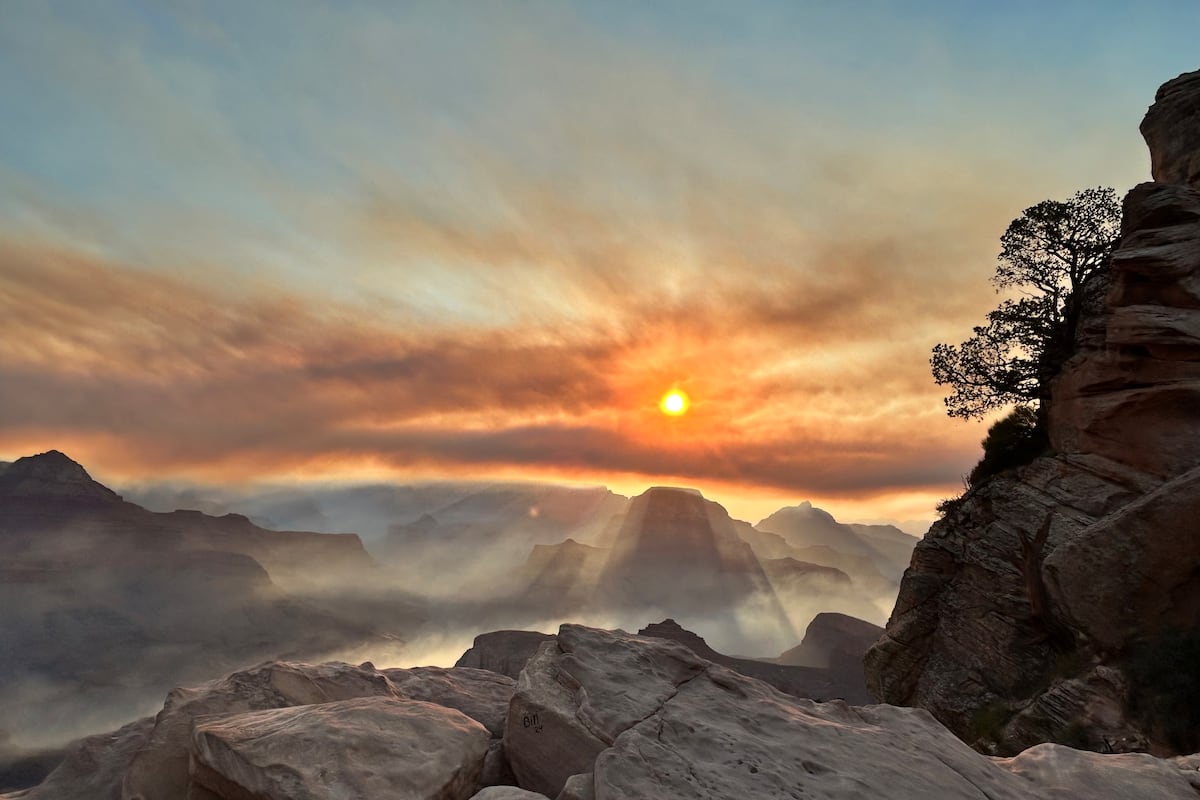
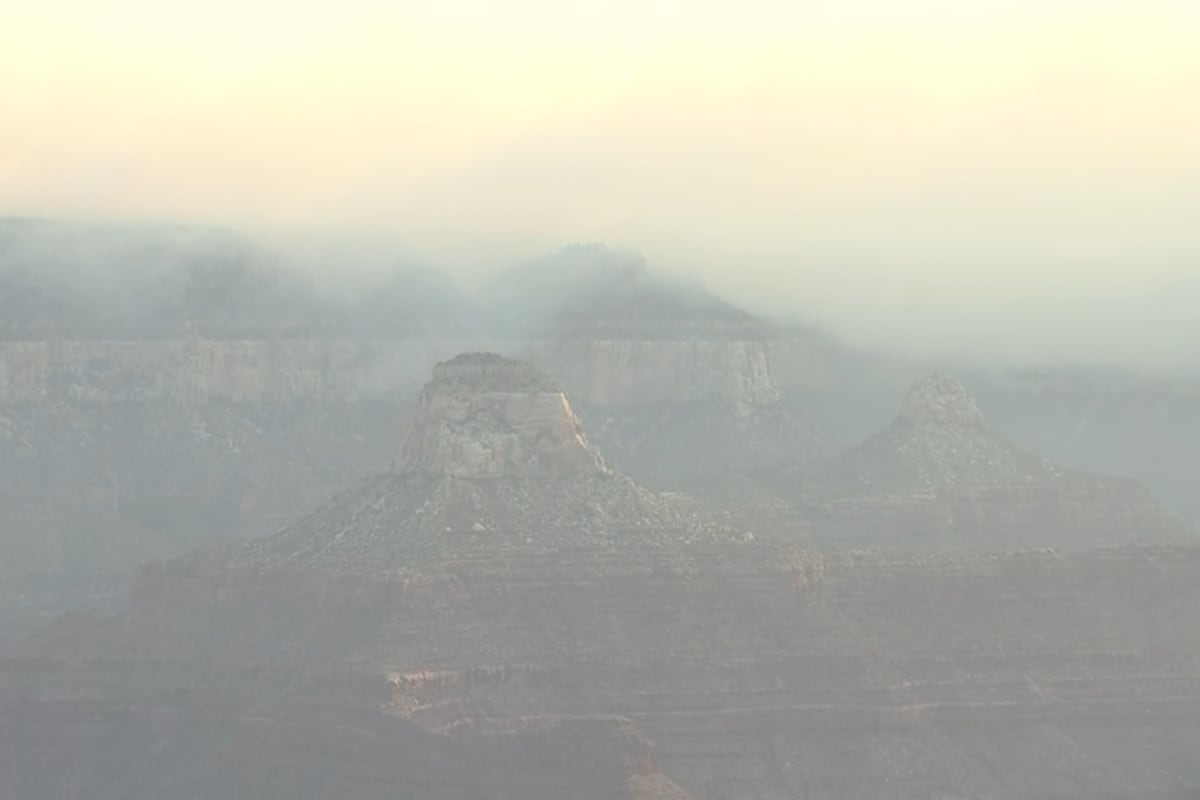
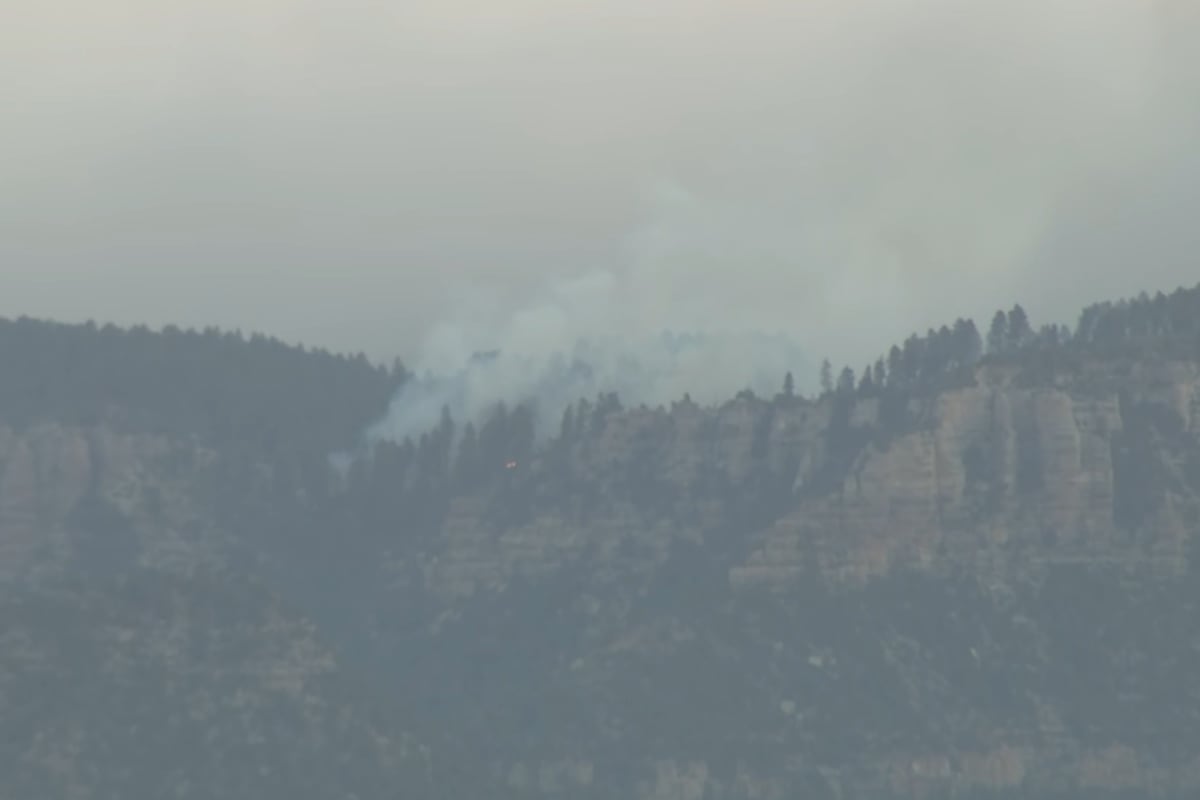
Video captured on July 14 shows smoke from the Dragon Bravo Fire along the North Rim of Grand Canyon National Park. Around the 30-second mark, you can see the retardant surrounding the lodge but not on it.
Gov. Katie Hobbs has called for an independent probe into the management of Dragon Bravo Fire because, she says, despite the blaze being lightning-caused, the federal government failed to manage it “during the driest, hardest part of the Arizona summer.”
“I am calling for the federal government to conduct a comprehensive, thorough, and independent investigation into the management of the Dragon Bravo Fire, and to produce a report detailing the decisions that led to this devastating outcome,” the governor said.
On July 23, Gov. Hobbs met with Interior Secretary Doug Burgum in Washington, D.C., about the Dragon Bravo Fire. The governor later called that meeting “productive” and said both she and Secretary Burgum want to see the fire get contained and are committed to an independent review of the fire management.
The National Park Service has confirmed that, as a result of the ongoing firefight and the destruction of key infrastructure, visitor access to that side of the canyon will remain closed for the remainder of the season.
Millions of people visit Grand Canyon National Park annually, with most going to the more popular South Rim. The North Rim typically opens seasonally.
“I share the same reaction that the rest of the Grand Canyon community does and that’s just devastation and especially for the people. The people who live there, the people who work there. You know it’s only open for five months out of the year and that’s a special time,” said The Grand Canyon Hiker Dude podcast host Brian Speciale.
Grand Canyon National Park Superintendent Ed Keeble told park residents and staff that the Grand Canyon Lodge, the only lodging at the North Rim, was consumed by the flames. The visitor center, the gas station and a wastewater treatment plant were also lost.
“Because of the Dragon Bravo Fire, Arizona lost more than a historic lodge, it lost a piece of our state history,” said Sen. Ruben Gallego in a social media post.
The Grand Canyon Lodge first opened in 1928, before it burned down a few years later from a cigarette fire and a rebuild was completed in 1937.
“For over 90 years, this hotel that burned down (Saturday) night was serving guests. Only about 1 in 10 people who see the Grand Canyon see it from the North Rim. It’s at 1,000 feet higher elevation than the South Rim, so the trees are much larger and greener, and as everybody is trying to wrap their head around this, it’s obvious that it’s going to take a long, long time for this to even resemble, minimally, what it has been throughout its history,” said Grand Canyon Historical Society Board Member Wayne Ranney.
Park officials said numerous historic cabins, as well as employee housing and an administrative office, were among the buildings destroyed.


No injuries have been reported. All staff and residents were evacuated before the flames spread.
Park officials say the blaze became extremely volatile due to windy conditions late on July 12, forcing it to grow by 500 acres overnight. Fire crews, however, weren’t able to use aerial retardant due to the chlorine gas leak at the water treatment plant.
The burning of the wastewater treatment plant resulted in the release of chlorine gas that prompted the evacuation of firefighters and hikers from the inner canyon, park officials said.
Residents of Marble Canyon, Lees Ferry, and a small area of the Navajo Nation were advised of a possible chlorine odor. The gas is heavier than air and can quickly settle into lower elevations such as the inner canyon, posing a health risk.
“Another tragic reminder why we must keep investing in wildfire resilience at the federal and state levels,” said Rep. Greg Stanton in a social media post.
“I am incredibly saddened by the destruction of the historic Grand Canyon Lodge, and my heart goes out to every person impacted by the Dragon Bravo Fire near the Grand Canyon’s North Rim. As someone who was born and raised in Arizona, I know what the Grand Canyon National Park means to so many people, not just in Arizona, but all over the world,” Gov. Hobbs said in part.
clarification: An earlier version of this story described the initial fire management strategy as a "controlled burn." It has been updated to reflect the terminology used by the U.S. Department of the Interior, including "confine and contain," to more accurately describe the response and avoid confusion about the fire’s origin, which was sparked by lightning.
See a spelling or grammatical error in our story? Please click here to report it.
Do you have a photo or video of a breaking news story? Send it to us here with a brief description.
Copyright 2025 KTVK/KPHO. All rights reserved.