‘28 Years Later’ squanders interesting ideas with a half-baked execution
“There are many kinds of death.” - Dr. Kelson in ‘28 Years Later’

PHOENIX (AZFamily) — Remember when movies used to just be movies?
Synopsis
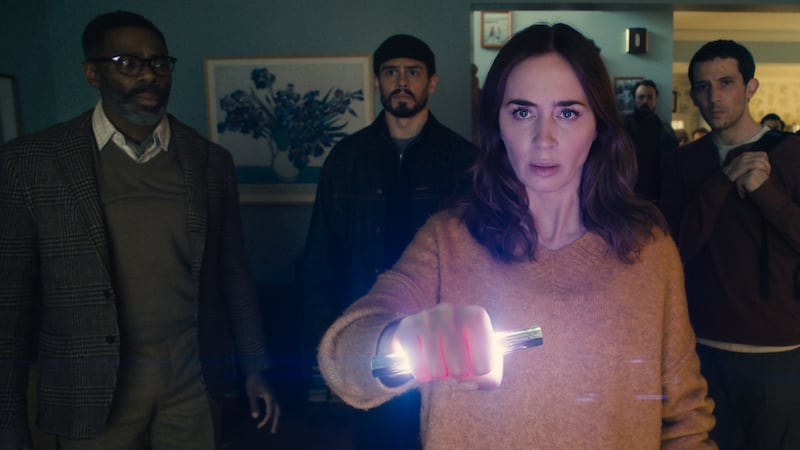
In 2002, the Rage Virus broke out in the United Kingdom, turning people into violent, zombielike individuals who ravaged the country until it was closed off from the rest of the world. 28 Years Later, a small colony lives on an island only accessible via a causeway during low tide. Scavenger Jamie (Aaron Taylor-Johnson) takes his son Spike (Alfie Williams) to the mainland to hunt Rage-infected humans as a rite of passage, where they end up getting far more than they bargained for.
My thoughts
28 Years Later is one of those horror movies I’m surprised didn’t spawn a massive franchise. The first one is a classic in the zombie genre (yeah, I know they’re not technically “zombies,” whatever), and while 28 Weeks Later wasn’t anywhere near as good, the potential for a series of films was there. The naming convention of the titles was even asking for it! It seemed logical that we would get 28 Months Later, then Years, Decades, Centuries, and Millennia, and perhaps even some prequels like 28 Seconds Later, Minutes, Hours- you get the idea.
Due to legal ownership issues and waiting for the creative stars to align, fans had to wait 18 years to finally get a follow-up to 28 Weeks Later. Sequels coming out over a decade later are enough to give anybody pause, but this wasn’t just any belated sequel. Original 28 Days Later director Danny Boyle, screenwriter Alex Garland, and cinematographer Anthony Dod Mantle were back to further flesh out the world they created over two decades ago, which got everybody hyped.
I was one of those hyped-up people because of all this returning talent, particularly Alex Garland, who’s become one of my favorite filmmakers. Unfortunately, it didn’t take long for my high hopes to be dashed a little bit. Upon doing my research, I found another movie titled 28 Years Later: The Bone Temple. “Oh, no. You’re not telling me,” I began to think, and then my worst suspicions were confirmed. Yep... this isn’t just one movie.
Seasons change, time passes by
You see, 28 Years Later isn’t really a third part of a trilogy to follow up Days and Weeks, but it’s actually the first part of not two but three movies. Directed by Nia DaCosta, The Bone Temple was shot back-to-back with this installment and is slated for release in January 2026. The third part of the trilogy is still in development, which Danny Boyle said he’s keen to direct if these two installments perform well.
If you’re going to write a trilogy, that’s all fine and good, but it’s a tough balancing act. You’re telling this grand, overarching story over three films, yet each movie should still stand on its own in some respect. Even if it’s part of a larger narrative that will be fully resolved in further installments, a single movie should still have a solid beginning, middle, and end to make it stand on its own in some respect.
You especially want your first installment to have a satisfying story because if you lose the audience here in the first act, what’s to make them want to return for more? Every time a new story element gets introduced in 28 Years Later, you think the movie’s finally going somewhere until that’s dropped, and we meander to the next plot point. When I glanced at my watch and saw we only had 20 minutes left, yet it felt like barely anything has happened, I thought, “Wow, this really is a Part 1.”
The reason I prefer watching movies over TV shows is because I know I will be getting a full story told within an average 2-hour time frame. I don’t need to watch multiple episodes or seasons to get the full story or worry that the story won’t be continued. For the first time I think ever in the history of watching a movie in a theater, my initial reaction when the end credits began to roll was, “I feel like I just watched an extended television pilot on the big screen.”
The worst thing is that there are so many cool ideas to be found in 28 Years Later, but they don’t receive the proper development and exploration. I enjoyed seeing the concepts from the original film evolving and playing out as one would expect, with Garland and Boyle paving the way for many different avenues to go down. I’m sure we’ll get more of what we saw in the next two parts, but this is exactly why this movie is so aggravating; you should be giving the audience all of this now!
It’s surprising the script is so weak, especially since Alex Garland penned it. This is his third film in a row that examines themes of war, where I felt he said what he needed to say with Civil War and Warfare. Is the blatant symbolism of Spike being a child soldier intercut with archive footage featuring children training in the military and fighting in wars really necessary? Once or twice is enough to make a point, but after that, it was just unnecessarily repetitive.
As the weeks become the months become the years
28 Days Later may have been a zombie movie, but it became a classic because it was a zombie movie primarily focused on the characters. It explored how people and society at large would react to this situation with a lot of realistic depth, with the regular people sometimes being far scarier than the infected ones chasing after our characters. 28 Years Later is centered all around the characters, except they’re not as interesting, mostly because their stories are unfinished.
The cast is excellent, doing the most they can with the material provided. Aaron Taylor-Johnson brings the grit and pain of being a father raising a child while dealing with a mentally unstable wife during a post-apocalyptic scenario. Jodie Comer plays his wife, Isla, and as she did exactly a year ago in The Bikeriders, she outperforms her co-stars with an empathetic, scene-stealing performance. If any actor deserves better movies and characters, it’s her.
Spike is really the main character, with Alfie Williams making an impressive big-screen debut. This is a pretty joyless and humorless affair, which makes this a heavy role for a teenager to play, but he sells every bit of it. His character arc comes on a bit too quickly, but I have no doubts he’ll be able to carry the next film. The scenes he shares with Ralph Fiennes are fantastic, and hopefully he gets more screen time with Aaron Taylor-Johnson in the future because their character dynamic could go somewhere interesting.
David Lynch would be ashamed
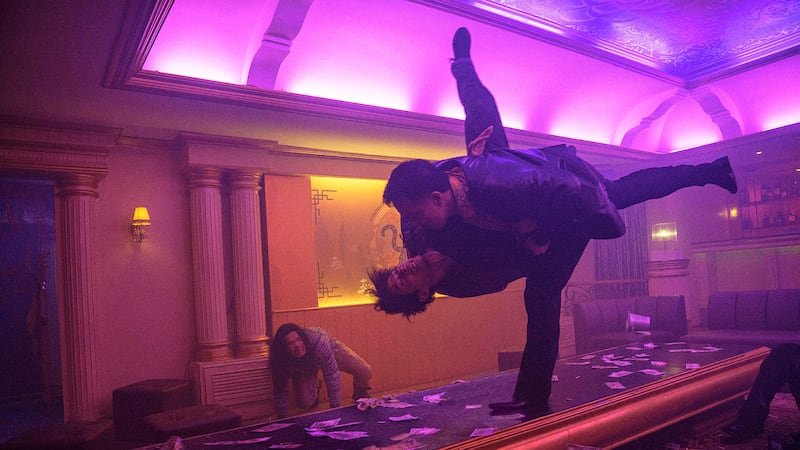
Danny Boyle has directed nine films over the 22 years since 28 Days Later, and his stylish, frenetic flair is still ever present, just now done with a little bit more panache. I’m unsure exactly how I feel about his pseudo-Zack Snyder action direction, which consists of freeze frames and swooping camera movements. However, he still has the ability to create some haunting and disgusting images. Like the Rage-infected folks in this movie, Boyle’s direction is a natural evolution in his craft over the past two decades.
Boyle is a great visual director, but I don’t think he handled the tone here as well as he did in the original film. There’s only one moment in Years that matches the intensity of the previous two entries, but overall, it’s never as scary or tense as it should be. The odd musical choices contributed to the tonal dissonance, as the score from Young Fathers was certainly atmospheric but never allowed me to totally feel the fear. The infected in this movie are nasty, though, with a copious amount of spine-tingling gore.
Another strange decision, and there are plenty of them in this movie, is that it was mainly shot using an iPhone 15 Pro Max with specialized rigs and attachments. Few feature films have been shot with smartphones, so it was surprising to see such a high-profile, big-budget release use one. It all makes sense if you know that the original 28 Days Later was partially shot on a standard-definition camcorder instead of film, which is why it looks like garbage on modern 4K TVs.
That raw videotape aesthetic was part of the original film’s janky, low-budget charm, and the decision to shoot 28 Years Later on an iPhone seems like a deliberate homage to that. I completely understand the intent, but can we just not shoot major motion pictures on telephones? There’s the occasionally pleasing landscape shot, especially during the nighttime sequences, but the constant blurring and soft focus was making me lose my mind.
Final verdict
I’ll be curious to see how fans respond to 28 Years Later, especially since this is supposed to kick off a trilogy. Unless you’re in the know, there’s no indication while watching this that it’s Part 1, that there’s a Part 2 coming, or that it’s leading anywhere all that meaningful. There’s not even a little teaser trailer at the end to show off the next installment, so I could see many people thinking this is an incomplete movie and leaving the theater frustrated.
28 Years Later isn’t exactly a movie I disliked, nor am I all that disappointed. I’m honestly just perplexed. My train of thought during my viewing sort of boiled down to, “Um, what? Okay, sure, I guess…” Danny Boyle and Alex Garland incorporate all sorts of fascinating ideas into this new episode of their unique zombie universe. They just didn’t give themselves the opportunity to fully explore them because they were too focused on making three movies instead of one.
My rating: 5.5/10
28 Years Later is currently playing in theaters nationwide.
See a spelling or grammatical error in our story? Please click here to report it.
Do you have a photo or video of a breaking news story? Send it to us here with a brief description.
Copyright 2025 KTVK/KPHO. All rights reserved.